
American Bulldog vs French Bulldog
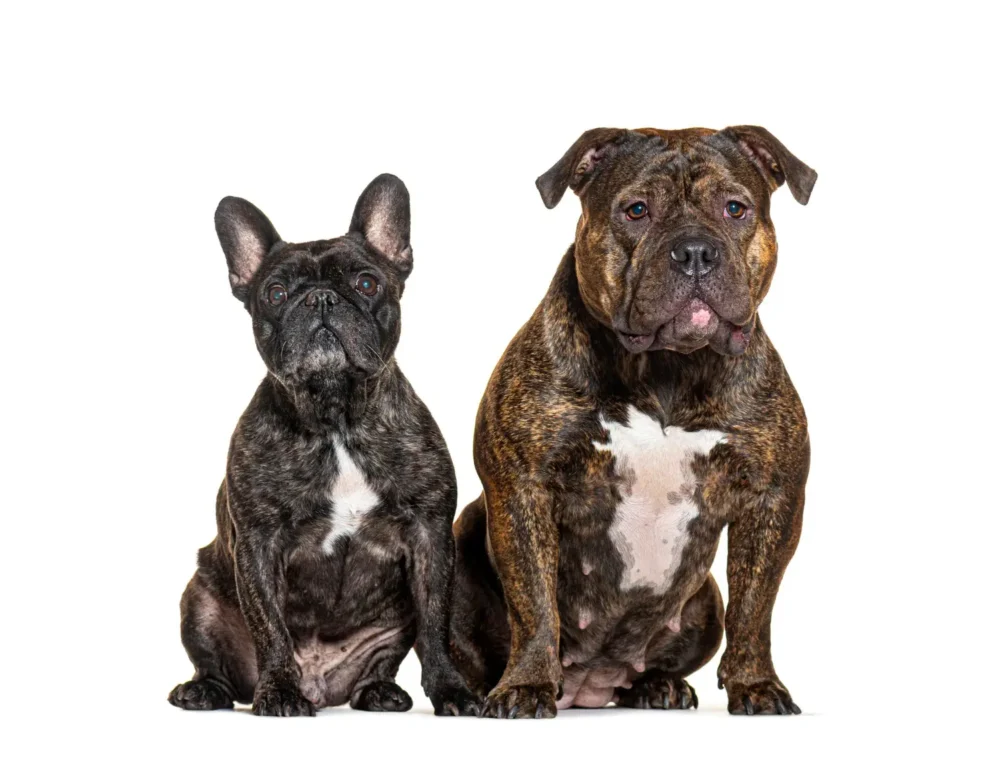
Walk down any city street and you’ll spot French Bulldogs everywhere—those bat-eared little companions have become America’s favorite dog. But mention “American Bulldog” to most people and you’ll get blank stares. Despite sharing a name, these breeds are about as similar as a pickup truck and a Smart car.
Where These Dogs Come From
Their history tells you everything you need to know about why they’re so different today. American Bulldogs developed as tough farm workers in the American South, while French Bulldogs evolved from English lap dogs that French artisans refined into perfect city companions. So you’ve got one breed designed to work Southern farms and another bred to sit in Parisian cafés. No wonder they’re nothing alike.
The American Bulldog Story: Built for Work
American Bulldogs weren’t bred to look pretty—they were bred to work their tails off on Southern farms. These dogs descended from English Bulldogs that early settlers brought to the American South around the 17th century, where they handled everything from wild boar to livestock protection.
Southern farmers didn’t care about breed standards back then. They cared about dogs that could handle real work and protect their families. This practical approach created dogs with varying sizes and builds, but they all shared that core toughness and loyalty that made them invaluable on working farms.
Modern breed registries didn’t start standardizing these dogs until the mid-20th century, and even today, different organizations maintain slightly different requirements. Some lines emphasize the original working traits while others focus more on show ring appearance—which creates ongoing debates about what an “ideal” American Bulldog should actually look like.
French Bulldogs: From English Workshops to Parisian Cafés
Here’s something that surprises people: French Bulldogs actually started in England with lace workers who bred smaller bulldogs as companions. When the Industrial Revolution put these artisans out of work, many moved to France and brought their little bulldogs along.
French breeders fell in love with these compact companions and refined them further, developing those distinctive “bat ears” and the square, muscular build we see today. Parisian society embraced these charming dogs, and they quickly became fixtures in cafés and artists’ studios throughout the city.
Wealthy Americans discovered French Bulldogs during European travels in the late 1800s and brought them back to the States. The breed’s adaptability to city living and irresistible personality gradually expanded their appeal beyond just the upper classes.
Understanding their French Bulldogs personality and temperament helps explain why they evolved into such perfect urban companions compared to their working dog counterparts.
The Dramatic Size Difference
When people see these breeds side by side for the first time, they’re genuinely shocked. American Bulldogs can weigh four times more than French Bulldogs. We’re talking about dogs that range from lap-sized to “small horse” territory.
American Bulldogs are genuinely massive dogs—males typically hit 75-125 pounds while females range 60-90 pounds. They stand 20-28 inches tall and look every bit the powerful working dog they were bred to be. French Bulldogs are the complete opposite—they max out at 20-28 pounds regardless of gender and stand just 11-13 inches tall.
The growth patterns tell the whole story too. American Bulldog puppies go through crazy growth spurts and might not finish developing until they’re almost two years old. French Bulldog puppies grow more predictably and usually reach adult size by their first birthday.
Built for Different Jobs
The American Bulldog’s structure screams “working dog”—longer muzzle for better breathing during hard work, powerful hindquarters for jumping and running, and a rectangular body shape that’s all about function over form. French Bulldogs showcase that classic flat-faced look with their square, compact build and those unmistakable “bat ears.” Their structure prioritizes cuteness and companionship over athletic ability.
Consider Sarah, who lives in a studio apartment in Manhattan. She initially wanted an American Bulldog but realized after research that her 500-square-foot space couldn’t accommodate a 100-pound dog that needs substantial exercise. She chose a French Bulldog instead, whose 25-pound frame and moderate exercise needs fit perfectly with her urban lifestyle and daily walks around the block.
For prospective owners wondering about French Bulldog development, our guide on French Bulldog size provides detailed information about their compact build and growth patterns throughout their first year.
| Characteristic | American Bulldog | French Bulldog |
| Weight | 60-125 lbs | 20-30 lbs |
| Height | 20-28 inches | 11-13 inches |
| Growth Period | Up to 2 years | 12 months |
| Body Type | Rectangular, athletic | Square, compact |
| Exercise Needs | High | Moderate |
American Bulldogs typically sport white base colors with patches of brindle, brown, red, or black. Some are solid white, while others show more extensive color coverage. Breed standards usually require at least 10% white markings—a throwback to their working days when visibility mattered.
French Bulldogs offer an incredible color variety from standard brindle, fawn, and cream to rare colors including blue, chocolate, and lilac. These rare colors often cost significantly more but may come with additional health considerations that responsible breeders manage through genetic testing.
Exploring the stunning variety of French Bulldog colors reveals just how much selective breeding has expanded their palette compared to the more traditional American Bulldog colorations.
Personality: Guardian vs Companion
Picture this: An American Bulldog sees a stranger at your gate and thinks “Is this person supposed to be here?” A French Bulldog sees the same stranger and thinks “New friend!” That pretty much sums up their different approaches to life.
American Bulldogs maintain strong protective insticts, and need mental stimulation from their working heritage. They’re naturally confident dogs who size up situations before reacting, and their protective instincts are strong. This isn’t aggression—it’s careful assessment combined with genuine loyalty to their families.
Mental stimulation is needed for these dogs—it’s essential. Their working heritage means they need jobs, even if that job is just learning new tricks or having designated patrol routes around your property. Early socialization becomes crucial because of their size and caring nature.
These dogs are smart but stubborn—they’ll think through your commands rather than blindly following them. Consistent, patient training works best, and they respond well to positive reinforcement combined with clear boundaries. Their eagerness to please their family makes them generally trainable despite occasional stubborn streaks.
French Bulldogs are natural people-pleasers with personalities that adapt to almost any living situation. They’re alert and playful without being hyperactive, making them excellent companions for families, singles, and seniors. Most Frenchies are genuinely social and enjoy meeting new people, though individual personalities vary.
They generally get along well with other dogs and pets when properly introduced, and their non-aggressive nature makes them suitable for multi-pet households. Parents considering either breed should understand French Bulldogs and kids’ interactions, as their gentle nature contrasts significantly with theAmerican Bulldogs maintain strong protective instincts around children.
Health: Two Sets of Serious Concerns
Both breeds face significant health challenges, but for completely different reasons. American Bulldogs deal with size-related issues while French Bulldogs struggle with breathing problems from their flat faces.
American Bulldog Health Issues
Size creates most of their health problems. Hip dysplasia occurs frequently because of their substantial frame, while elbow dysplasia and ACL tears are common orthopedic issues. Their longer muzzle provides better breathing than flat-faced breeds, but they can still struggle during intense exercise or hot weather.
Responsible breeders screen for Neuronal Ceroid Lipofuscinosis (NCL)—a genetic disorder specific to American Bulldogs that affects the nervous system. Additional screening includes hip and elbow evaluations, cardiac exams, and eye clearances.
Their athletic nature creates injury risks, particularly during their high-energy adolescent phase. Owners must balance their need for activity with careful monitoring to prevent overexertion and joint stress during development.
French Bulldog Health Reality
Breathing problems dominate French Bulldog health concerns. Brachycephalic Obstructive Airway Syndrome (BOAS) affects many individuals, causing breathing difficulties that range from mild snoring to severe respiratory distress requiring surgery.
Temperature regulation is a serious issue—French Bulldogs can’t cool themselves effectively due to compromised breathing, making them extremely vulnerable to heat stroke. Owners must carefully monitor temperature exposure and limit outdoor activity during warm weather.
Spinal issues occur frequently due to their body structure. Intervertebral disc disease (IVDD) is common, and their compact build also predisposes them to luxating patella and hip dysplasia.
Understanding the full scope of common French Bulldog health issues is crucial when comparing the health challenges between these two very different breeds.
Litter sizes tell the story—American Bulldogs typically have 6-12 puppies while French Bulldogs average just 2-4 puppies per litter. This difference impacts breeding programs and puppy availability, contributing to price differences between breeds.
| Health | American Bulldog | French Bulldog |
| Primary Concerns | Hip dysplasia, NCL, orthopedic issues | BOAS, spinal issues, temperature regulation |
| Breathing Issues | Minimal due to longer muzzle | Severe due to flat face |
| Breeding Method | Natural | Artificial insemination/C-section |
| Average Litter Size | 6-12 puppies | 2-4 puppies |
| Lifespan | 10-12 years | 10-12 years |
Living Situations: Space Makes the Decision
Your lifestyle, work schedule, and living situation will usually make this decision for you. American Bulldogs need substantial space, secure yards, and thrive in suburban or rural environments due to their size and protective nature. French Bulldogs excel in urban apartments with their moderate exercise needs and quiet nature, though they require climate-controlled environments.
Exercise Needs That Make All the Change
American Bulldogs need substantial daily exercise including walks, play sessions, and mental stimulation. They enjoy activities such as hiking, swimming, and agility training that challenge both body and mind. Without adequate exercise, they become destructive or develop behavioral issues.
French Bulldogs require moderate exercise but must be carefully monitored due to breathing restrictions. Short walks and indoor play sessions typically meet their needs, while swimming should be avoided due to their body structure.
Beauty Tips
American Bulldogs have simple grooming needs—weekly brushing and regular nail trims. Their short coat sheds moderately but doesn’t require professional grooming. French Bulldogs need specialized care including daily facial fold cleaning to prevent infections and careful attention to their sensitive skin. They often require regular veterinary monitoring for breathing issues and may need professional help with nail trims due to their sensitivity.
Proper maintenance is essential for French Bulldogs, and our comprehensive guide on how to care for French Bulldogs covers all the specialized care requirements that distinguish them from low-maintenance breeds such as American Bulldogs.
Before You Decide
Before choosing an American Bulldog, ask yourself: Do you have a secure, spacious backyard? Can you provide 60+ minutes of daily exercise? Are you comfortable handling a 100+ pound dog? Do you have experience with protective breeds? Can you commit to consistent training?
Before choosing a French Bulldog, consider: Do you live in a climate-controlled environment? Can you handle potential breathing emergencies? Are you prepared for higher veterinary costs? Are you committed to daily facial fold cleaning? Do you have access to emergency veterinary care?
Before making your decision, consider reading about French Bulldog pros and cons to fully understand what ownership entails beyond the initial appeal of their adorable appearance.
Why Families Choose Kingdom Frenchies
Families searching for French Bulldog puppies for sale in Texas and most of the country, can work with a breeder experienced in placing Frenchies across different climates. Respiratory health, lifestyle fit, and long-term well-being are always prioritized.
Check out our comprehensive care guides on our Frenchie specialized blog to better understand what French Bulldog ownership actually entails.
We encourage you to explore our available puppies and learn about our breeding philosophy to understand why families across the continental US trust us for their Frenchie companions.
Contact us at any time to learn more about our Frenchie companions.